
When Space Is Understood,
Decisions Follow
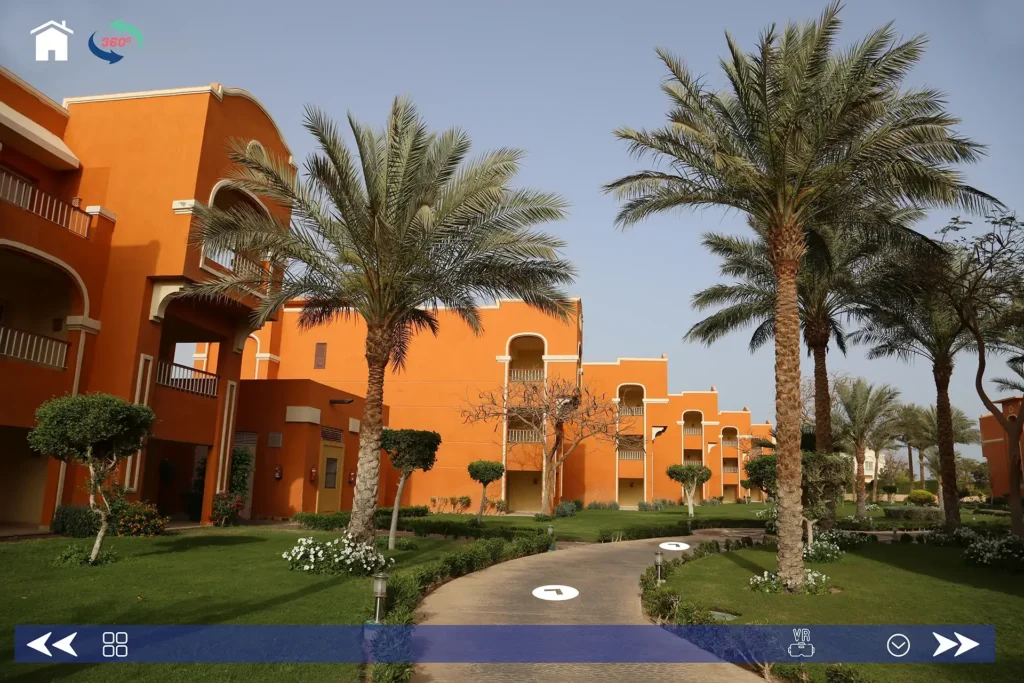
360° virtual tours that reveal the true value of your investment.
Why Virtual Tours
Built for hotels and large properties where layout, scale, and movement directly influence trust, decision-making, and booking confidence.
Understanding the Space
Photos show how a space looks.
Virtual tours show how a space works.
For large properties, this difference directly affects booking behavior.
Virtual tours allow guests to:
- Understand layout and scale
- Move through spaces freely
- See how areas connect
- Make decisions with greater confidence
Clarity before arrival reduces hesitation.
Proven Business Impact
Virtual tours are not a cosmetic upgrade.
They are a decision-support tool.
Across hospitality and large commercial properties, they are consistently associated with:
- 40–70% longer time spent on page
- Up to 16% higher direct booking conversion
- Up to 130% increase in qualified inquiries
- Higher booking confidence and fewer pre-arrival objections
Unlike campaign-based photo or video content, a virtual tour remains a persistent asset until the space changes structurally.
Additional Strategic Advantages
Beyond measurable engagement metrics, virtual tours also provide structural advantages:
- 24/7 property accessibility across time zones
- Faster decision-making during corporate and group bookings
- Reduced time spent answering repetitive pre-visit questions
- Easy shareability via email and sales communication
- Stronger competitive positioning in visually saturated markets
- Alignment between marketing visuals and real-world spatial experience
A virtual tour simplifies the evaluation process.
Google Visibility & Platform Distribution
Every virtual tour is published to Google Street View as part of the standard delivery.
This improves:
- Visibility in Google Search
- Presence in Google Maps
- Engagement within Google Business Profiles
- First impressions before users reach the website
Beyond Google, the same spatial capture can be structured into:
- 360° Facebook panoramic photos
- Tiny Planet visuals for social media
- 360° walkthrough video
- 360° YouTube publishing
- Vertical extracts for social campaigns
One spatial system. Multiple controlled outputs.
How We Build Virtual Tours
Every tour is designed as a spatial system — not a collection of panoramas.
Planning & Structure
Property layout is analyzed to define clear navigation logic before capture.
Multi-floor structures, separate buildings, and indoor–outdoor transitions are mapped to ensure continuity and orientation
Controlled Capture
Scenes are captured with consistent angles and proportions to preserve real-world scale.
No artificial staging, exaggerated HDR, or spatial distortion — the property is presented as it is.
Navigation & Flow
Tours are structured so users always understand where they are and how spaces connect.
The goal is spatial clarity — not visual effects.
What Matters for Your Property
What You Get
- Structured 360° virtual tour optimized for web and mobile
- Clear, controlled navigation across all areas
- Visual consistency throughout the property
- Brand-aligned presentation (colors, typography, logo, UI) when required
- Google Street View publishing included
- Multi-format outputs for distribution
Accurate. Usable. Easy to trust.
Additional video and photography services are available as structured extensions when required.
Video and Photography
Where Virtual Tours Are Used
- Hotel websites during booking decisions
- Resorts and large destination properties
- Retail and shopping centers
- Corporate visitor facilities
- Sales presentations and leasing discussions
- Google Business Profiles and Google Maps
Selected Virtual Tours
The big question - the price ?
We believe that every project is unique. Our pricing starts at 500 euros for smaller projects with up to 10 360° panoramas in the virtual tour.
For larger projects that span multiple 360° panoramas and wide areas, prices may exceed 40,000 euros.
The investment in a virtual tour is a one-time endeavor, serving as a marketing asset for years to come. Updates may be required only when showcasing renovated spaces.